Total Safety From The Name You Trust
We sell and service life safety equipment to keep you and your employees safe, and deliver a peace of mind that your business is in compliance.
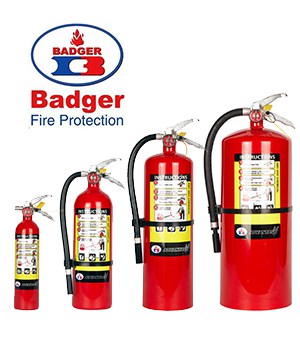
Fire Extinguishers
- Sales: The full line of industry-leading Badger fire extinguishers for every fire type
- Service: Mobile inspection, recharge, and certification services, drop-off hydrostatic testing and recharging, sprinkler systems, kitchen and industrial systems, and extinguisher recycling
- Cabinets and Accessories: Extinguisher storage cabinets, brackets, vehicle mounts, and other essential safety equipment
- Extinguisher Training: On-site classes, including live fire training, to assure your employees know how to respond in an emergency
Medical Cabinets and Exit Lights
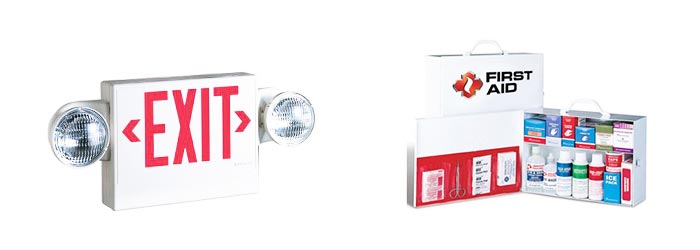
- Medical/First Aid Cabinets: OSHA/ANSI -compliant cabinets for on-the-job safety and accident response
- Exit/Emergency Lights: Chamber design protects threads and valve stem from accidental damage
- Service: On-site service of exit and emergency lights to maintain safety and code compliance
SCBA Cylinders and Valves
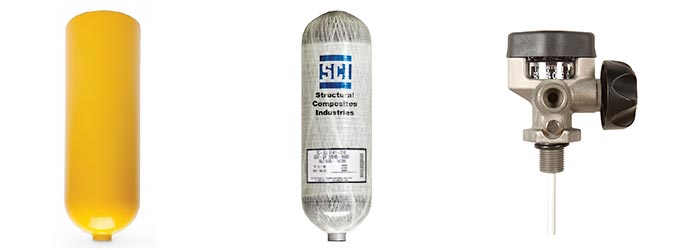
- SCBA Cylinders: Reliable standard and composite cylinders for critical breathing operations
- SCBA Valves: Dependable air delivery in the most demanding circumstances
FREQUENTLY ASKED QUESTIONS
What life safety equipment should commercial and industrial facilities maintain?
Commercial and industrial facilities should maintain fire extinguishers, emergency exit lighting, fire extinguisher cabinets, SCBA cylinders, and compliant inspection services.
Life safety equipment is required to protect employees, customers, and property during fire or emergency situations. Core equipment typically includes portable fire extinguishers for immediate fire suppression, illuminated exit signage for evacuation guidance, and properly mounted cabinets that ensure extinguishers remain visible and protected.
Facilities that involve hazardous environments, confined spaces, or fire response teams often also maintain SCBA cylinders and breathing air equipment used by emergency responders or trained safety personnel.
Maintaining compliant life safety equipment helps organizations meet OSHA and NFPA requirements while reducing operational risk and ensuring readiness during emergencies.
How often should fire extinguishers be inspected and serviced?
Fire extinguishers must be visually inspected monthly and professionally serviced annually according to NFPA fire protection standards.
Monthly inspections typically involve verifying that extinguishers are properly mounted, accessible, fully charged, and free from visible damage. These checks are often performed by facility safety staff or maintenance teams.
Annual inspections require certified technicians who verify mechanical condition, pressure levels, and compliance labeling. Depending on the extinguisher type, additional services such as internal maintenance, hydrostatic testing, or recharge may be required at scheduled intervals.
Routine inspections ensure extinguishers remain functional and compliant with fire codes used by OSHA, insurance carriers, and local fire authorities.
What types of fire extinguishers are used in commercial buildings?
Commercial buildings typically use ABC dry chemical extinguishers, CO2 extinguishers, and specialized extinguishers designed for electrical, flammable liquid, or kitchen fire risks.
ABC extinguishers are the most common because they address Class A (ordinary combustibles), Class B (flammable liquids), and Class C (electrical fires). These multipurpose extinguishers are widely used in offices, warehouses, retail environments, and industrial spaces.
CO2 extinguishers are frequently installed near electrical equipment and server rooms because they suppress fires without leaving residue that could damage electronics.
Facilities with specialized risks such as commercial kitchens, fuel storage, or chemical processing may require additional extinguisher types designed specifically for those hazards.
Why are fire extinguisher cabinets required in many facilities?
Fire extinguisher cabinets protect extinguishers while keeping them visible, accessible, and compliant with building safety codes.
Cabinets are designed to prevent damage, tampering, and environmental exposure that could reduce extinguisher reliability. They also help maintain consistent placement so employees and emergency responders can quickly locate equipment during an emergency.
Many facilities install recessed or surface-mounted cabinets in hallways, manufacturing areas, and public spaces to comply with fire codes and building design requirements.
Properly installed cabinets improve both safety readiness and the long-term durability of life safety equipment.
What is fire extinguisher training and why do employees need it?
Fire extinguisher training teaches employees how to safely operate extinguishers and respond effectively during the early stages of a fire.
Training programs typically include instruction on fire classifications, extinguisher types, and the PASS method (Pull, Aim, Squeeze, Sweep). Participants also learn when it is appropriate to attempt fire suppression versus evacuating the facility.
Many organizations conduct hands-on training exercises that simulate real fire scenarios, allowing employees to practice safe extinguisher operation under controlled conditions.
Proper training improves emergency response capability and supports workplace safety programs required under OSHA fire protection standards.
What are SCBA cylinders used for in life safety operations?
SCBA cylinders supply breathable compressed air to firefighters and emergency responders operating in hazardous or oxygen-deficient environments.
Self-Contained Breathing Apparatus systems are used during firefighting, confined space rescue, hazardous material response, and industrial emergency operations. These cylinders allow responders to operate safely in smoke-filled or contaminated environments.
SCBA cylinders are typically high-pressure composite or aluminum cylinders that store compressed breathing air and connect to a regulator and face mask assembly.
Proper maintenance, hydrostatic testing, and valve integrity are critical to ensuring these cylinders function reliably during life-critical situations.
What is the difference between SCBA cylinders and SCBA valves?
SCBA cylinders store compressed breathing air, while SCBA valves regulate the flow of air from the cylinder into the breathing apparatus.
The cylinder functions as the high-pressure air storage container, typically rated for pressures such as 3,000 psi, 4,500 psi, or higher depending on the model. The valve assembly attaches to the cylinder neck and controls air delivery.
Valves include safety features such as pressure relief devices, threaded connections, and shutoff controls designed for breathing air applications.
Both components must meet strict safety standards to ensure reliable airflow for firefighters and rescue personnel during emergency operations.
What maintenance services are required for fire extinguishers and emergency exit lighting?
Fire extinguishers and exit lighting require regular inspection, testing, and maintenance to remain compliant with fire safety codes.
Extinguishers must undergo routine inspections, pressure checks, and periodic internal maintenance depending on their classification and age. Exit lighting systems must also be tested to verify that batteries, bulbs, and emergency power functions operate correctly.
Professional service providers typically document these inspections and attach compliance tags that confirm maintenance dates and technician verification.
Scheduled service programs help facilities meet regulatory requirements and ensure safety equipment remains operational when needed.
How do emergency exit lights improve building safety during emergencies?
Emergency exit lights provide illuminated evacuation guidance when power failures or smoke conditions reduce visibility.
These systems activate automatically during power outages and ensure that exit pathways remain clearly visible to building occupants. Properly placed exit lights help guide people safely toward stairwells, exits, and emergency egress routes.
In many jurisdictions, building codes require exit signage and emergency lighting to meet specific brightness and placement standards.
Maintaining reliable exit lighting is essential for safe evacuation and compliance with life safety codes.
How can organizations safely recycle compressed gas cylinders?
Compressed gas cylinders should be recycled through authorized cylinder service providers that follow DOT handling and disposal procedures.
Cylinder recycling programs safely depressurize, dismantle, and process cylinders that are no longer serviceable or economically repairable. This prevents unsafe disposal practices and ensures hazardous materials are handled properly.
Authorized service centers may also evaluate cylinders for refurbishment, requalification, or component recovery before recycling.
Using professional recycling programs helps organizations comply with safety regulations while responsibly managing retired compressed gas equipment.


