CO2 Regulators
CO2 regulators are critical for controlling gas pressure across beverage systems, industrial processes, hydroponics, aquariums, and welding applications. At All Safe Global, we supply CO2 primary regulators, dual-gauge regulators, replacement gauges, and regulator accessories designed for consistent pressure control, safety, and long-term reliability in professional environments.
Explore Further (click to learn more):
All Safe is proud to offer premium Taprite CO2 primary regulators, replacement gauges, and accessories for all CO2 applications. Whether you are dispensing beer, operating a kegerator system, managing nitro coffee or soda carbonation, or supporting industrial and welding workflows, the right regulator ensures stable PSI output, accurate monitoring, and system efficiency.
Our selection supports high-pressure CO2 cylinders (CGA320 connections) and is built for compatibility across beverage dispensing systems, hydroponic grow operations, and industrial gas setups. Products are designed to maintain flow control, reduce pressure fluctuation, and support compliance-driven environments.
All Safe Global is a wholesale supplier of CO2 primary regulators, parts, and accessories, specializing in pallet quantities, large-volume purchases, and quantity discounts. We work directly with distributors, OEMs, and commercial operators; single-item retail purchases are not available.
FREQUENTLY ASKED QUESTIONS
What is a CO2 regulator and how does it work?
CO2 regulators reduce high-pressure gas from a cylinder to a controlled, usable output pressure.
CO2 regulators attach to a compressed gas cylinder and step down pressure from thousands of PSI to a stable working range. This is essential for applications like beverage dispensing, where consistent carbonation depends on precise pressure control.
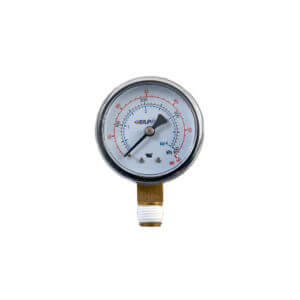
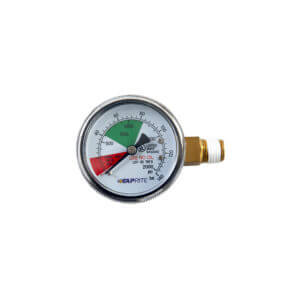
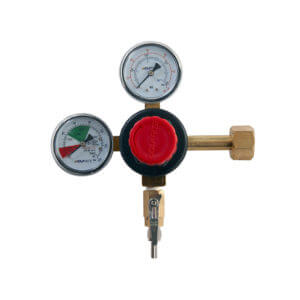
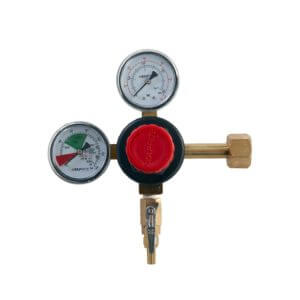
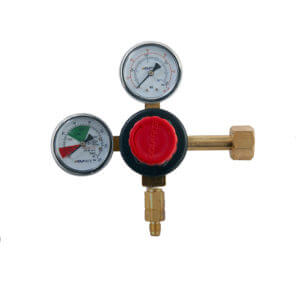
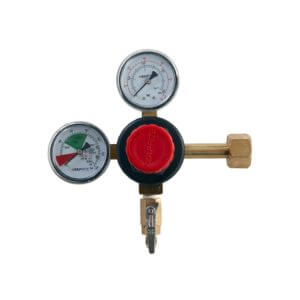
Most CO2 regulators use a dual-gauge design, showing both cylinder pressure and output pressure. This allows operators to monitor gas levels and adjust delivery pressure based on system requirements, ensuring operational stability and product consistency.
What is the difference between a single gauge and dual gauge CO2 regulator?
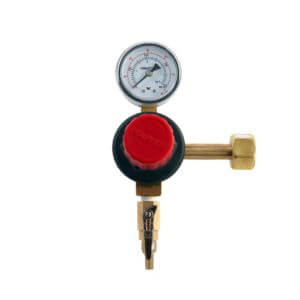
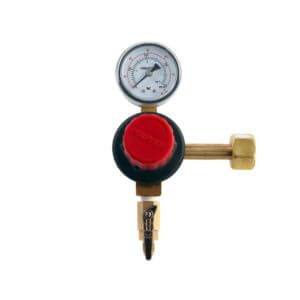
A dual gauge CO2 regulator displays both tank pressure and output pressure, while a single gauge shows only output pressure.
Dual gauge regulators are standard in professional environments because they provide visibility into remaining gas supply and system performance. This reduces downtime by helping operators anticipate cylinder replacement.
Single gauge regulators may be used in basic setups, but they limit visibility and control. For beverage, industrial, and commercial use, dual gauge regulators are typically preferred for reliability and operational awareness.
What PSI should a CO2 regulator be set to for beer or beverage systems?
Most beer and beverage systems operate between 10–14 PSI depending on carbonation level and temperature.
The correct PSI depends on factors such as beverage type, serving temperature, and line length. Higher carbonation beverages or colder systems may require different pressure settings to maintain proper carbonation levels.
Using a reliable CO2 regulator ensures consistent flow and prevents issues like over-foaming or flat product. Adjustable regulators allow operators to fine-tune pressure for different beverages and dispensing conditions.
What type of connection do CO2 regulators use?
CO2 regulators typically use a CGA320 connection for standard CO2 cylinders in the United States.
The CGA320 connection is the industry standard for CO2 gas cylinders used in beverage, industrial, and hydroponic applications. It ensures a secure and compatible fit between the regulator and the cylinder valve.
Using the correct connection type is critical for safety and compliance. Mismatched fittings can lead to leaks or equipment failure, making proper specification essential in professional environments.
Can CO2 regulators be used for multiple applications like beverage and industrial use?
Yes, CO2 regulators can be used across beverage, hydroponic, aquarium, and industrial applications when properly specified.
The core function of pressure regulation is consistent across industries, but application-specific requirements such as pressure range, flow rate, and outlet configuration must be considered.
For example, beverage systems prioritize stable low-pressure output, while industrial applications may require higher flow rates or different fittings. Selecting the right regulator ensures performance and compatibility with your system.
How do I know if I need a primary CO2 regulator?
You need a primary CO2 regulator when you are controlling pressure directly from a CO2 cylinder.
Primary regulators mount directly onto the cylinder and reduce high-pressure gas to a usable level for downstream equipment. They are essential for any system that uses compressed CO2.
In larger or more complex systems, secondary regulators may be added downstream for additional pressure control. However, the primary regulator is always the first stage of pressure reduction.
What industries commonly use CO2 regulators?
CO2 regulators are widely used in beverage dispensing, hydroponics, aquariums, welding, and industrial gas applications.
In beverage environments, they control carbonation and dispensing pressure. In hydroponics, they regulate CO2 enrichment levels to support plant growth.
Industrial and welding operations rely on regulators for controlled gas delivery, while aquariums use them to maintain stable CO2 dosing. Each use case requires consistent and reliable pressure control.
How do I choose the right CO2 regulator for my system?
The right CO2 regulator depends on your required pressure range, flow rate, connection type, and application.
Buyers should evaluate whether they need single or dual gauge monitoring, the appropriate PSI range, and compatibility with existing equipment. Features like shut-off valves, multiple outlets, or precision adjustment may also be important.
For wholesale buyers and system integrators, selecting regulators that align with operational standards and compliance requirements ensures long-term performance and reduces maintenance issues.
Do CO2 regulators require maintenance or replacement parts?
Yes, CO2 regulators require periodic inspection and may need replacement gauges, seals, or internal components over time.
Regular maintenance helps ensure accurate pressure readings and safe operation. Gauges can wear out or become inaccurate, especially in high-use environments.
Replacing worn components extends the life of the regulator and maintains system reliability. Many professional setups keep spare gauges and repair parts available to minimize downtime.
Can I buy CO2 regulators in bulk for commercial or distribution use?
Yes, CO2 regulators are available for bulk purchase through wholesale suppliers like All Safe Global.
Bulk purchasing supports distributors, OEMs, and commercial operators who require consistent inventory and cost efficiency. It also allows for standardized equipment across multiple locations or systems.
All Safe Global specializes in large-volume orders, pallet quantities, and quantity discounts, making it a practical partner for businesses operating at scale rather than individual retail buyers.


