Beverage Towers
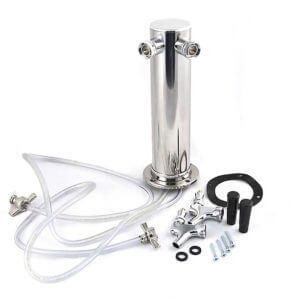
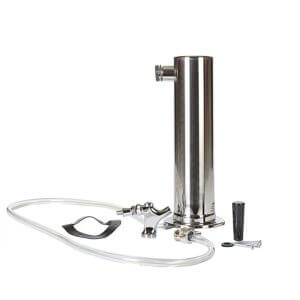
Beverage towers are a critical component in professional draft beverage systems, providing a clean, efficient interface between your kegerator or dispensing system and the end user. Designed for craft beer, nitro cold brew coffee, kombucha, and soda applications, these draft towers support consistent flow control, temperature stability, and reliable service in commercial environments.
Explore Further (click to learn more):
At All Safe Global, our selection of stainless steel beverage towers includes single-faucet and multi-faucet configurations built for durability, corrosion resistance, and long-term performance. These towers integrate seamlessly with keg systems, CO2 or nitrogen regulators, and draft lines, making them ideal for breweries, coffee shops, foodservice operations, and beverage distributors.
Add to quote to select, and choose quantity on the quote form to configure your system based on your operational needs. Whether you’re building a new dispensing setup or upgrading existing draft equipment, these towers are designed for consistent pour quality, hygiene, and uptime in high-demand environments.

FREQUENTLY ASKED QUESTIONS
What is a beverage tower used for in a draft system?
A beverage tower is used to dispense beverages from a keg through faucets mounted above a counter or kegerator.
Beverage towers act as the final delivery point in a draft system, connecting liquid lines from the keg to the faucet where the beverage is poured. They are commonly used for beer, nitro coffee, kombucha, and soda dispensing in commercial environments.
For operators, the tower impacts pour quality, temperature consistency, and user experience, making it a critical component in bars, breweries, and coffee service setups.
What types of beverages can be dispensed through a beverage tower?
Beverage towers can dispense beer, nitro cold brew coffee, kombucha, soda, and other kegged beverages.
These systems are designed to handle both CO2-driven and nitrogen-driven applications, making them versatile across multiple beverage categories. Nitro coffee systems, for example, require compatible faucets and gas setups to achieve proper texture and cascade.
For B2B buyers, selecting a tower compatible with your gas type, beverage viscosity, and service environment ensures consistent performance.
What is the difference between a single-faucet and multi-faucet beverage tower?
A single-faucet tower dispenses one beverage line, while a multi-faucet tower supports multiple beverages from separate kegs.
Single-faucet towers are commonly used in low-volume or single-product applications, such as dedicated nitro coffee service. Multi-faucet towers are preferred in bars, taprooms, and high-volume environments where multiple beverage options are required.
Choosing between them depends on your menu complexity, throughput requirements, and available keg capacity.
Why are stainless steel beverage towers preferred in commercial applications?
Stainless steel beverage towers are preferred because they offer durability, corrosion resistance, and easy sanitation.
In beverage dispensing, maintaining cleanliness and product integrity is essential, and stainless steel resists buildup, contamination, and wear over time. This is especially important in foodservice and regulated environments.
For operators, stainless construction reduces maintenance frequency and supports long-term compliance with sanitation standards.
How do beverage towers connect to a keg system?
Beverage towers connect to kegs through liquid lines, couplers, and gas-driven pressure systems.
The tower houses the beer or beverage lines, which run from the keg through a coupler and are pushed by CO2 or nitrogen gas. These lines terminate at the faucet mounted on the tower.
Proper integration with regulators, tubing, and fittings is essential to maintain pressure balance and ensure a consistent pour.
Do beverage towers require insulation or cooling?
Yes, beverage towers often require insulation or active cooling to maintain proper beverage temperature.
In many systems, towers include insulated columns or recirculation lines to prevent temperature rise between the keg and faucet. Without this, beverages can pour warm or produce excess foam.
For high-volume or premium applications, maintaining temperature stability inside the tower is critical for product quality and customer experience.
What should you consider when selecting a beverage tower for your operation?
You should consider faucet count, material, compatibility, and system configuration when selecting a beverage tower.
Key factors include the number of beverages served, gas type (CO2 or nitrogen), mounting configuration, and space constraints. Material selection, typically stainless steel, impacts durability and sanitation.
B2B buyers should also evaluate throughput demands and compatibility with existing kegerator or draft systems.
Are beverage towers compatible with both CO2 and nitrogen systems?
Yes, beverage towers are compatible with both CO2 and nitrogen systems when paired with the correct components.
The tower itself is a passive component, but the faucets, regulators, and gas setup determine compatibility with specific beverages. Nitro systems require specialized faucets and nitrogen pressure.
Ensuring full system compatibility is critical for achieving proper carbonation levels and pour characteristics.
How do beverage towers impact pour quality and foam control?
Beverage towers impact pour quality by maintaining stable pressure, temperature, and flow from keg to faucet.
Poor tower design or improper setup can lead to excess foam, inconsistent pours, or temperature fluctuations. Properly designed towers support smooth flow and balanced pressure.
For operators, this directly affects product consistency, waste reduction, and customer satisfaction.
Can beverage towers be used in both commercial and homebrew setups?
Yes, beverage towers can be used in both commercial and homebrew draft systems.
While commonly used in bars, breweries, and coffee shops, smaller configurations are also suitable for advanced homebrew setups. The same principles of pressure control, sanitation, and system compatibility apply.
For homebrewers scaling toward professional-grade systems, beverage towers provide a commercial-style dispensing solution.


