Healthcare organizations worldwide rely on the proven performance of All Safe Global’s medical compressed gas equipment.
We carry a full range of high-quality medical cylinders, valves, regulators, and carts for all your care requirements.
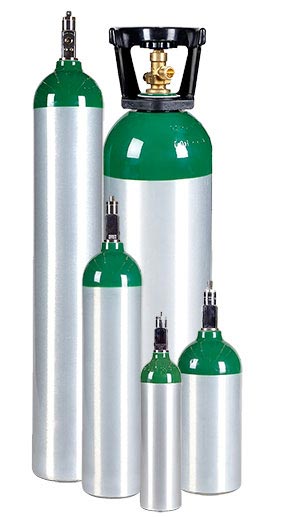
Medical Oxygen Cylinders
Exceptionally safe and strong, our cylinders are in daily use by EMS teams, home oxygen providers, and medical institutions. Available in all medical standard sizes, including E, D, M6, M9, M24, and M122.
- Tough and Durable: All Safe cylinders are fracture-tough, resistant to tears and cracks under extended high-pressure loads, and inherently corrosion-resistant, for long service life in the most demanding environments
- Lightweight: We feature easy-to-carry carbon composite and aluminum cylinders—up to 40% lighter than steel
- Tested Safe: All cylinders undergo and pass rigorous strength and integrity tests, and meet or exceed all industry quality and safety requirements
- Transport Ready: All cylinders strictly conform to Department of Transportation (DOT) specifications. Most also conform to and are approved under Transport Canada (TC) specifications
- Labels Included: Easy-to-read consumer warning decals with every cylinder, for the protection of you and your customers
- Ship unfilled
- Free shipping available on pallet orders of certain cylinders
Medical Valves and Regulators
All Safe Global carries post valves, mix service valves, regulators, and integrated valve regulators for most medical and EMS gas applications. Manufactured to exacting standards of performance and reliability, our valves and regulators are available for steel, aluminum and composite cylinders, and in all common medical gas service configurations.
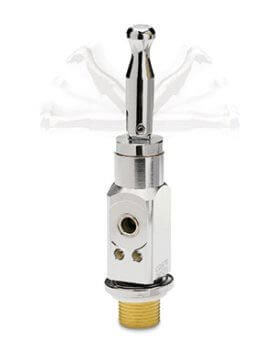
Medical Post Valves
- Durable: Extruded brass chrome-finished valve bodies provide long cycle life and excellent corrosion resistance
- Protected: Chamber design protects threads and valve stem from accidental damage
- Secure: Engineered for complete, low-torque sealing and leak resistance, with precise thread machining, Teflon packing, dual O-Rings, and a leak-resistant bonnet seal
- Safe: Valves feature an integrated pressure relief device for proper assembly, lasting safety, and tamper-resistance
- Ready for use with all CGA-specified yoke style valves
- Available in wrench- or toggle-type connections
- Fully cleaned for oxygen service
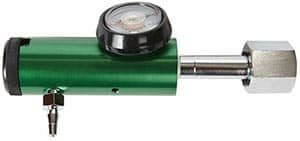
Medical Regulators
- Durable: Precision-machined from aluminum for long life, light weight, and compact form
- Easy to Use: Large, user-friendly markings for simple and accurate flow adjustment
- Secure: Engineered for leak resistance, with precise thread machining
- Versatile: For maximum usability in a wide range of applications, each regulator comes with yoke- and nut-style inlet connections and are available in multiple flow ranges
- Fully cleaned for oxygen service
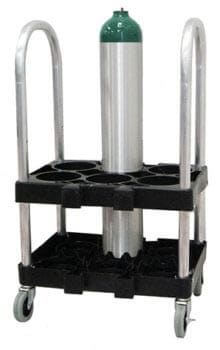
Medical Cylinder Carts
Our Rack N’ Roll Modular Cylinder System provides simple and secure storage for aluminum medical gas cylinders.
The system features completely molded construction, no-rattle trays, and aluminum handles, and is available in stationary or smooth-rolling locking wheel designs.



FREQUENTLY ASKED QUESTIONS
What equipment is needed for a medical oxygen cylinder setup?
A complete medical oxygen system typically includes an oxygen cylinder, a medical oxygen regulator, a compatible oxygen valve, and a transport cart or mounting accessory.
Medical oxygen cylinders store compressed oxygen under high pressure and serve as the primary gas source for portable or stationary oxygen delivery systems. The cylinder valve controls gas release from the tank, while the regulator reduces pressure to a safe and usable level for medical devices.
Carts, wall brackets, and other accessories help stabilize and transport cylinders in hospitals, ambulances, clinics, and home healthcare environments. Together, these components ensure controlled oxygen delivery, regulatory compliance, and safe patient use.
What is the difference between a medical oxygen regulator and an industrial oxygen regulator?
A medical oxygen regulator is specifically designed to deliver controlled oxygen flow for patient care, while industrial regulators are designed for welding, cutting, or manufacturing applications.
Medical regulators typically feature flow settings measured in liters per minute (LPM) and use CGA-standard medical connections such as CGA 870 or CGA 540. These regulators are designed to deliver precise oxygen flow rates required for respiratory therapy and emergency care.
Industrial regulators may operate at different pressure ranges and connection standards, making them unsuitable for medical oxygen delivery systems. Using equipment designed for medical oxygen ensures safe, compliant, and accurate gas flow control.
What sizes are available for medical oxygen cylinders?
Medical oxygen cylinders are available in multiple sizes designed for different healthcare and emergency applications.
Common cylinder sizes include portable options used by emergency responders and home healthcare providers, as well as larger cylinders used in hospitals, clinics, and oxygen distribution systems. Cylinder capacity is typically measured by gas volume or cubic feet.
Selecting the right cylinder size depends on oxygen consumption rates, portability requirements, and the intended use environment. Smaller cylinders are often used in EMS and patient transport, while larger cylinders support longer-duration oxygen supply in clinical settings.
What does a medical oxygen cylinder valve do?
A medical oxygen valve controls the release of compressed oxygen from the cylinder and provides the connection point for regulators and oxygen delivery equipment.
Cylinder valves are engineered to handle high internal pressures while allowing safe and controlled gas flow. They are manufactured to precise standards to ensure compatibility with medical oxygen regulators and gas delivery systems.
Properly installed valves help maintain system integrity and prevent leaks or pressure loss. In medical environments, valve reliability is critical for ensuring uninterrupted oxygen delivery to patients.
How do medical oxygen carts improve cylinder safety?
Medical oxygen carts help stabilize and transport oxygen cylinders safely in clinical, emergency, and home healthcare environments.
Carts are designed to hold cylinders securely while allowing mobility between rooms, patient areas, or vehicles. Many designs include straps, brackets, or locking mechanisms that prevent cylinders from tipping or shifting during movement.
By keeping cylinders upright and properly secured, carts reduce the risk of valve damage, accidental falls, and workplace safety hazards while improving operational efficiency for healthcare staff.
What is the standard pressure inside a medical oxygen cylinder?
Medical oxygen cylinders typically store oxygen at pressures around 2,000 to 2,200 PSI when fully filled.
This high pressure allows a relatively compact cylinder to hold a significant volume of oxygen gas for medical use. The regulator connected to the cylinder reduces this pressure to a safe and usable flow level for respiratory therapy devices.
Pressure gauges on the regulator help clinicians and technicians monitor remaining oxygen supply so cylinders can be replaced before depletion.
What connections are used on medical oxygen cylinders?
Medical oxygen cylinders commonly use CGA-standard connections such as CGA 870 for yoke-style connections and CGA 540 for threaded regulator connections.
These connection standards ensure compatibility between cylinders, valves, and medical oxygen regulators across healthcare systems and equipment manufacturers. They also help prevent accidental connection to incompatible gases.
Using standardized connections supports safe oxygen handling and simplifies equipment interchangeability for hospitals, EMS providers, and medical equipment distributors.
How long does a medical oxygen cylinder last during use?
The duration of a medical oxygen cylinder depends on the cylinder size and the oxygen flow rate set on the regulator.
For example, a small portable cylinder delivering oxygen at a low flow rate may last several hours, while higher flow settings will reduce available usage time. Larger cylinders naturally provide longer service durations before replacement is required.
Healthcare providers typically calculate oxygen duration using cylinder pressure readings and flow settings to ensure uninterrupted oxygen supply for patients.
What safety standards apply to medical oxygen cylinders and equipment?
Medical oxygen cylinders and related equipment must comply with regulations established by the U.S. Department of Transportation (DOT) and other relevant safety standards.
DOT regulations govern cylinder manufacturing, pressure testing, requalification, and transport safety to ensure compressed gas containers remain structurally sound. Healthcare environments may also follow additional regulatory and facility standards.
Using certified cylinders, valves, and regulators helps maintain compliance while ensuring safe oxygen storage, handling, and delivery.
What accessories are commonly used with medical oxygen cylinders?
Common accessories for medical oxygen cylinders include transport carts, cylinder stands, carry handles, mounting brackets, and protective caps.
These accessories support safe handling, storage, and mobility of compressed oxygen cylinders in healthcare facilities and emergency vehicles. Protective components help prevent valve damage and reduce the risk of accidental cylinder impact.
Proper accessories also improve workflow efficiency by allowing clinicians and technicians to move oxygen cylinders safely between patient care locations.