Disconnects
FREQUENTLY ASKED QUESTIONS
What is a keg disconnect and how does it work?
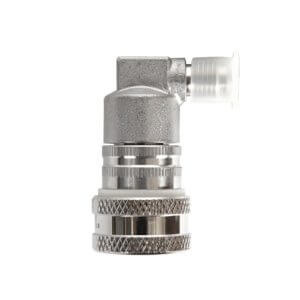
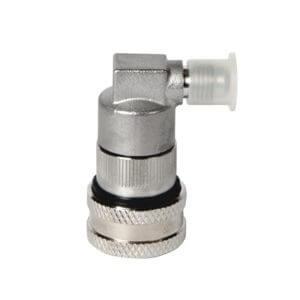
A keg disconnect is a quick-connect fitting that attaches gas or liquid lines to a keg post to enable pressurized beverage dispensing.
Keg disconnects create a sealed interface between the keg and dispensing system, allowing CO2 or nitrogen gas to pressurize the keg while simultaneously enabling liquid to flow out. Gas disconnects connect to the gas-in post, while liquid disconnects connect to the beverage-out post.
In commercial and homebrew systems, these components are essential for maintaining pressure, preventing leaks, and ensuring consistent pour quality across beer, cold brew coffee, and other beverages.
What is the difference between ball lock and pin lock disconnects?
Ball lock disconnects use a smooth post with internal ball bearings, while pin lock disconnects use external pins to secure the connection.
Ball lock systems are more common in modern homebrew and beverage setups due to their compact size and ease of use. Pin lock systems are typically found on older Cornelius kegs and are slightly wider, with a different locking mechanism.
Choosing the correct type depends on your keg style, and using the wrong disconnect will prevent proper attachment and system function.
How do I know which keg disconnect I need?
You need a keg disconnect that matches your keg type, post configuration, and whether you are connecting gas or liquid lines.
Start by identifying whether your keg uses ball lock or pin lock posts, then determine whether you need a gas (inlet) or liquid (outlet) disconnect. Gas disconnects are typically gray, while liquid disconnects are black in standard configurations.
For commercial operations or system builds, verifying thread size, barb fittings, or MFL connections ensures compatibility with your tubing and regulators.
Are keg disconnects universal across all kegs?
Keg disconnects are not universal and must match the specific keg style and connection standard.
Different kegs, such as Cornelius kegs and Sankey kegs, use different connection systems, and disconnects are designed accordingly. Even within Corny kegs, ball lock and pin lock systems are not interchangeable.
Using the correct disconnect ensures a secure seal, prevents leaks, and maintains system pressure during operation.
What is the difference between gas and liquid disconnects?
Gas disconnects deliver pressurized gas into the keg, while liquid disconnects allow beverage to flow out of the keg.
Gas disconnects connect to the “in” post and are designed to handle incoming CO2 or nitrogen pressure. Liquid disconnects connect to the “out” post and are engineered for smooth beverage flow without restriction.
Properly pairing gas and liquid disconnects is essential for maintaining carbonation levels and dispensing performance.
Can I use the same disconnect for beer and cold brew coffee systems?
Yes, keg disconnects can be used for both beer and cold brew coffee systems as long as they match the keg and connection type.
Both applications rely on pressurized dispensing systems, typically using CO2 for beer and nitrogen for cold brew coffee. The disconnect itself functions the same regardless of the beverage.
However, material compatibility and cleaning practices are important to prevent flavor carryover and maintain sanitary conditions.
What fittings are available on keg disconnects?
Keg disconnects are available with barb fittings, threaded MFL connections, and quick-connect options for different system setups.
Barbed fittings allow direct hose attachment, while MFL (male flare) connections provide flexibility for swapping lines and fittings. Some systems use push-to-connect fittings for faster installation.
Selecting the right fitting type depends on your tubing, maintenance needs, and system configuration.
How do I prevent leaks in my keg disconnect system?
Preventing leaks requires using the correct disconnect type, ensuring proper seating, and maintaining O-rings and seals.
Leaks typically occur due to worn O-rings, improper connections, or mismatched components. Regular inspection and replacement of seals help maintain a tight connection.
In commercial environments, leak prevention is critical for gas efficiency, product quality, and system safety.
Are keg disconnects suitable for commercial beverage operations?
Yes, keg disconnects are widely used in commercial beverage systems for reliable and repeatable connections.
Breweries, coffee shops, bars, and beverage distributors rely on disconnects for quick keg changes and consistent dispensing performance. High-quality disconnects are designed for repeated use and cleaning cycles.
For B2B buyers, durability and compatibility with existing systems are key considerations when selecting disconnect components.
How often should keg disconnects be replaced or maintained?
Keg disconnects should be regularly inspected and replaced when seals wear out or performance declines.
Routine maintenance includes cleaning, checking for cracks or wear, and replacing internal O-rings as needed. In high-use environments, preventative maintenance reduces downtime and ensures consistent operation.
Keeping spare disconnects and replacement parts on hand supports operational continuity and minimizes service interruptions.