Regulators
FREQUENTLY ASKED QUESTIONS
What does a compressed gas regulator do in industrial and commercial systems?
A compressed gas regulator controls and reduces high cylinder pressure to a stable, usable working pressure.
Regulators are critical because gas cylinders often store contents at pressures exceeding 2,000 PSI, which is unsafe and unusable for most applications. By reducing this pressure, regulators ensure downstream equipment operates safely and consistently.
In industrial, beverage, and medical environments, regulators also maintain flow stability and repeatability, which directly impacts product quality, safety compliance, and equipment lifespan.
How do I choose the right gas regulator for my application?
You choose the right gas regulator based on gas type, inlet pressure, outlet pressure range, flow requirements, and connection standards.
Different gases require specific regulator materials and CGA connections to ensure compatibility and safety. For example, oxygen regulators must meet stricter cleanliness standards, while CO2 regulators are optimized for beverage systems.
Buyers should also consider whether they need single-stage vs dual-stage regulation, as well as environmental conditions such as temperature, vibration, and duty cycle.
What is the difference between single-stage and dual-stage regulators?
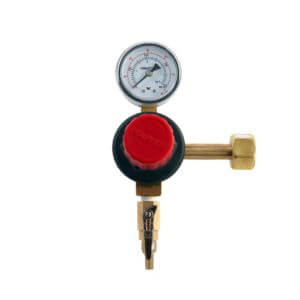
Single-stage regulators reduce pressure in one step, while dual-stage regulators reduce pressure in two steps for greater stability.
Single-stage regulators are commonly used in applications where inlet pressure changes do not significantly impact performance, such as short-duration or less sensitive operations.
Dual-stage regulators are preferred in laboratory, specialty gas, and precision applications because they maintain consistent outlet pressure even as cylinder pressure drops.
Which regulator is best for CO2 beverage dispensing systems?
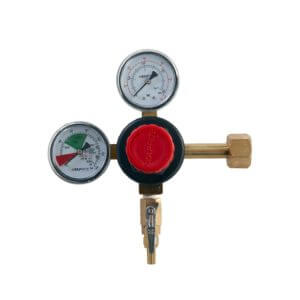
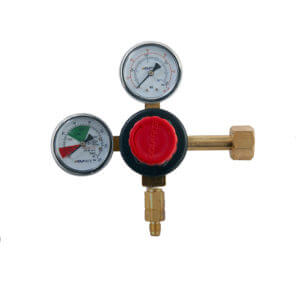
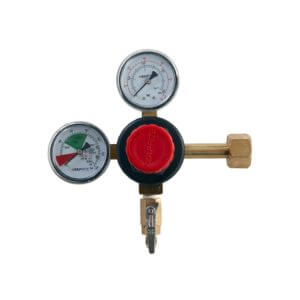
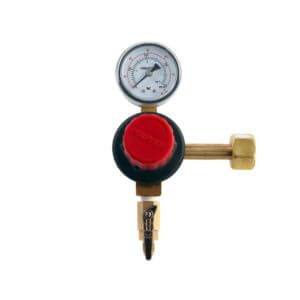
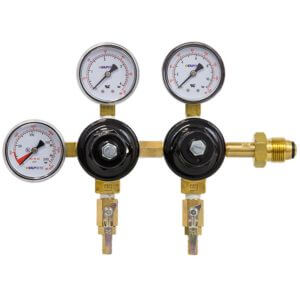
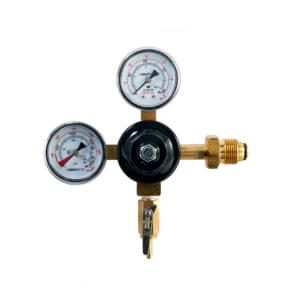
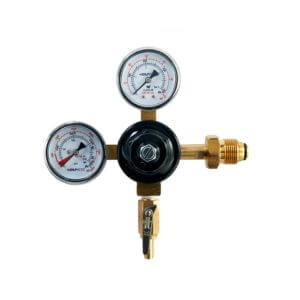
A CO2 regulator designed for beverage systems with dual gauges and precise PSI control is best for dispensing applications.
These regulators allow operators to monitor both cylinder pressure and output pressure, which is essential for maintaining carbonation levels and consistent pour quality.
In draft beer, soda, and nitro coffee systems, proper CO2 regulation prevents issues like over-carbonation, foaming, and product waste.
Are nitrogen regulators different from CO2 regulators?
Yes, nitrogen regulators are designed for higher pressure ranges and use different CGA connections than CO2 regulators.
Nitrogen systems often operate at significantly higher pressures, especially in applications like nitro coffee, tire inflation, and industrial processes, requiring regulators rated for those conditions.
Additionally, the connection standards prevent cross-use, ensuring safety and proper gas handling across systems.
What type of regulator is required for medical oxygen applications?
Medical oxygen applications require regulators that meet strict cleanliness, flow control, and compliance standards.
These regulators are designed to deliver precise flow rates and pressure levels suitable for patient care, often incorporating flowmeters or click-style flow settings.
They must also meet healthcare regulations and are typically used with CGA870 or CGA540 connections, depending on the cylinder type.
How do I know if a regulator is compatible with my gas cylinder?
Regulator compatibility is determined by matching the correct CGA connection, pressure rating, and gas service designation.
Each gas type uses a standardized CGA fitting to prevent incorrect connections, which is a critical safety feature in compressed gas systems.
Users should verify both the inlet connection and pressure rating to ensure safe and proper operation with their specific cylinder.
What industries commonly use compressed gas regulators?
Compressed gas regulators are used across industrial, beverage, medical, HVAC, laboratory, and welding industries.
In industrial settings, regulators control gases for cutting, welding, and manufacturing processes. In beverage systems, they manage carbonation and dispensing.
Medical and HVAC applications rely on regulators for safe oxygen delivery and refrigerant control, making them essential across multiple regulated environments.
How often should gas regulators be inspected or replaced?
Gas regulators should be inspected regularly and replaced when performance degrades, shows damage, or fails to meet pressure control requirements.
Routine inspection helps identify issues such as leaks, gauge failure, diaphragm wear, or inconsistent pressure output, all of which can impact safety and performance.
In high-use or regulated environments, scheduled maintenance and replacement are part of standard operating procedures to ensure compliance and uptime.
Why is precise pressure control important in gas regulator systems?
Precise pressure control ensures system safety, consistent performance, and protection of downstream equipment.
Incorrect pressure can lead to equipment damage, safety hazards, inconsistent product quality, or regulatory non-compliance, depending on the application.
For ICP buyers, reliable pressure control directly impacts operational efficiency, product consistency, and long-term equipment costs, making regulator selection a critical decision.


